


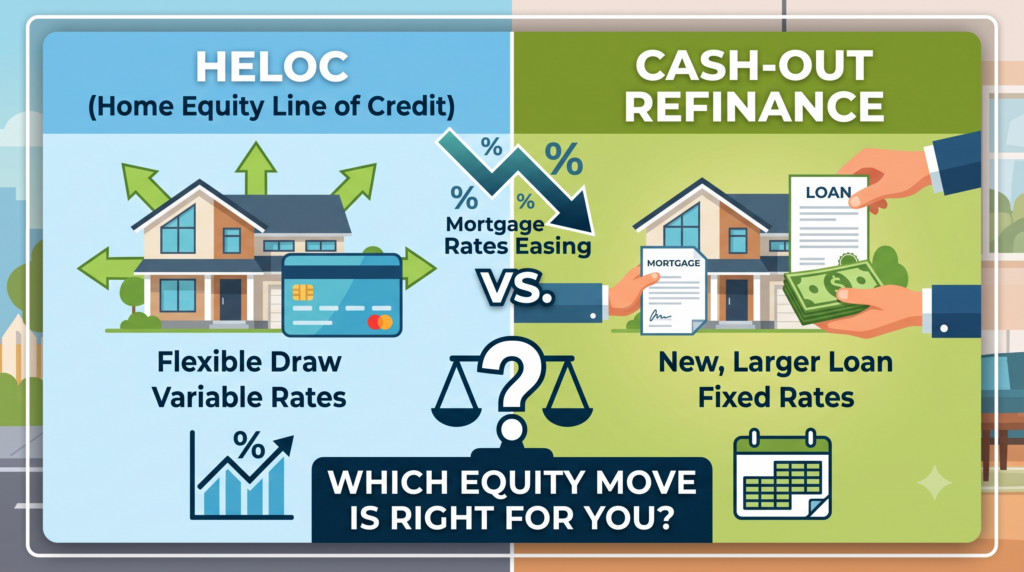
HELOC vs. Cash-Out Refinance: Making the Right Equity Move as Rates Ease
As mortgage rates gradually ease from recent highs, many homeowners are revisiting a question they may have put on hold over the past few years: How can I best access my home equity?
For borrowers who locked in ultra-low first mortgage rates in 2020–2022, today’s decision isn’t just whether to tap equity—but how. Two common options dominate the conversation: Home Equity Lines of Credit (HELOCs) and cash-out refinances. While both can be effective tools, they serve very different purposes in a softening rate environment.
Understanding the Core Difference
A cash-out refinance replaces your existing mortgage with a new, larger loan. You receive the difference in cash and begin making one new monthly payment at today’s interest rate.
A HELOC, on the other hand, is a second loan secured by your home. It functions more like a credit line—allowing you to borrow what you need, when you need it—while keeping your original mortgage intact.
The right choice depends heavily on your current rate, financial goals, and how long you plan to carry the debt.
Why HELOCs Are Gaining Popularity Right Now
In a market where many homeowners are sitting on first mortgage rates in the 2–4% range, HELOCs have become especially attractive. They allow borrowers to preserve that low rate while still unlocking equity for:
- Debt consolidation
- Home renovations or ADUs
- Business or investment opportunities
- Emergency or liquidity planning
HELOCs typically offer interest-only payment options during the draw period, which can improve short-term cash flow. For homeowners who expect to repay balances relatively quickly—or anticipate refinancing later if rates drop further—this flexibility can be valuable.
That said, most HELOCs carry variable interest rates, which means payments can rise if rates move higher again. Proper planning and realistic repayment strategies are key.
When a Cash-Out Refinance Still Makes Sense
Despite the rise of HELOCs, cash-out refinances remain a powerful option in the right scenario. They can be especially effective when:
- A borrower already has a higher existing rate
- The goal is long-term debt restructuring
- Rolling high-interest consumer debt into one fixed payment improves stability
- Rates drop enough to justify resetting the entire loan
A cash-out refinance offers payment predictability with a fixed rate and can simplify finances by consolidating everything into a single mortgage payment. And as rates continue to ease, the math may increasingly favor this strategy for the right borrower.
The Bigger Picture: Strategy Over Headlines
There is no universal “best” option—only the best-aligned strategy. What works for one homeowner may be the wrong move for another, even if they live next door and have similar equity.
The most important step is evaluating:
- Your current mortgage rate
- How long you plan to stay in the home
- How quickly you expect to repay borrowed funds
- Your tolerance for variable vs. fixed payments
In today’s market, thoughtful mortgage planning matters more than chasing headlines about rate movements.
If you’re considering tapping your home equity—or simply want a second opinion—I’m happy to help you evaluate the numbers and choose the approach that best supports your long-term goals.
Mike Beal
Mortgage Broker | 25 Years of Experience
📞 (619) 218-4706
🌎 Serving California, Texas, Florida & Michigan
